Land Sculpting for Sustainability: Sequenced Execution Playbook
By Ace Bailey Published November 26, 2026 12:00 PM Updated November 28, 2026 5 min read
Use this article as a practical decision guide, then follow the related resources when you are ready to act.
Essentials of Earthworks in Permaculture
Land Sculpting for Sustainability: Quick Scan & Core Answer
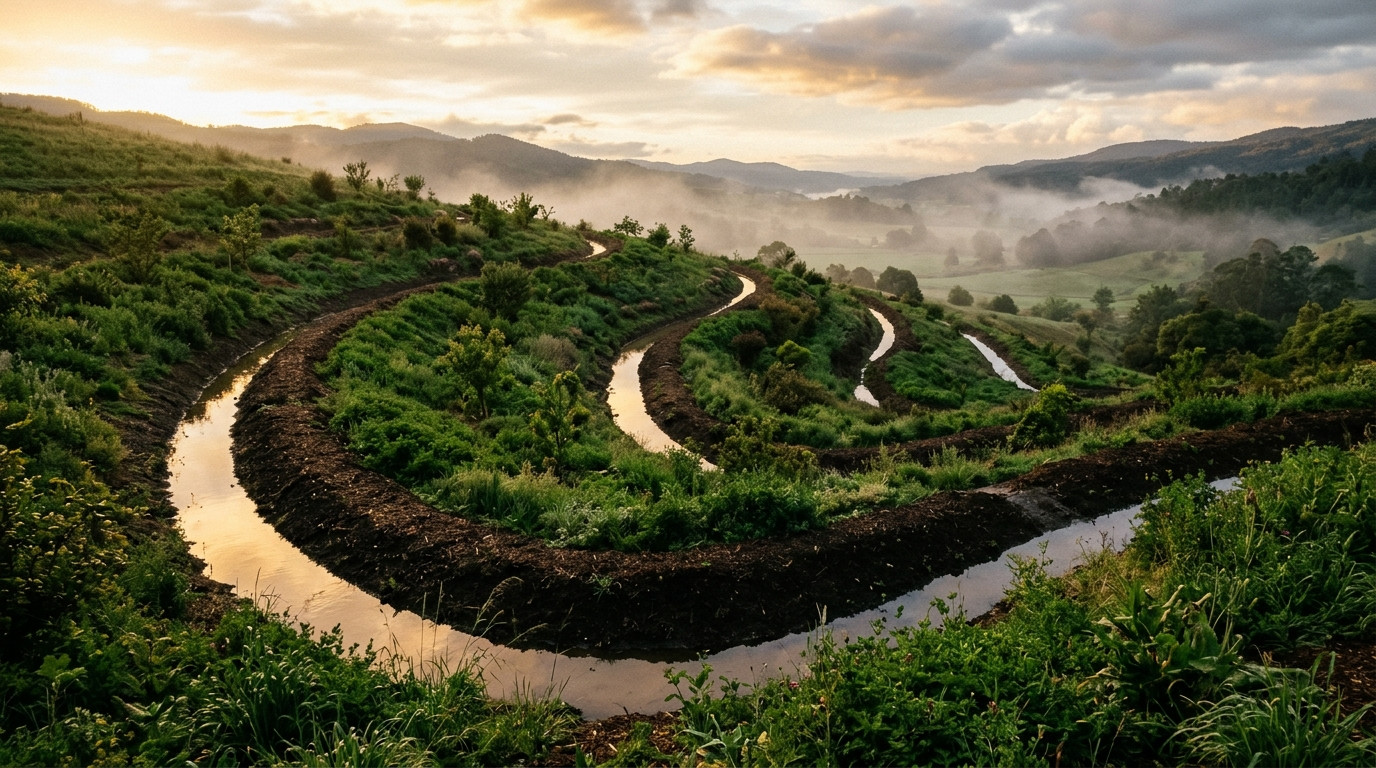
- Core Answer: The Essentials of Earthworks in Permaculture revolves around the principles of earthworks, including swales, terraces, and hugelkultur beds. These techniques are critical for managing water efficiently, reducing erosion, and enhancing soil health. The success of these earthworks depends on understanding the slope, soil type, and water flow characteristics of the land.
- Mechanism: The success of earthworks is predicated on the accurate assessment and preparation of the land before digging. This includes analyzing slope angles, soil percolation rates, and water flow patterns. The sequence of steps is critical for ensuring that earthworks are effective and sustainable.
- Hard Boundary: If the slope angle is not accurately assessed and accounted for, earthworks can fail, leading to erosion, ponding, and soil instability. Similarly, if soil percolation rates are not considered, water can be trapped, leading to saturation and potential failure.
Land Sculpting for Sustainability: Prerequisites Before You Start
Before diving into the earthworks, it is essential to understand the land’s characteristics. This includes assessing the slope, soil type, and water flow. The first step is to analyze the slope of the land. If the slope is above 15 degrees, it is critical to consider using terraces or swales to manage water flow. Additionally, the soil type must be assessed. Sandy soils will require different earthworks compared to clay-rich soils. Finally, water flow patterns must be understood. This includes identifying the direction of water flow and the potential for overflow. Without accurate preparation, earthworks can fail, leading to erosion and other issues.
Land Sculpting for Sustainability: The Sequenced Protocol
- Assess Slope: Use a surveyor’s level or a laser level to measure the slope of the land. If the slope is above 15 degrees, consider using terraces or swales.
- Assess Soil Type: Determine the type of soil (clay, sandy, loam, etc.) and its percolation rate. This information is crucial for choosing appropriate earthworks and ensuring they are effective.
- Map Water Flow: Identify the direction of water flow and map overflow paths to ensure water does not accumulate in critical areas. This includes identifying potential ponding and saturation points.
- Design Earthworks: Based on the slope, soil type, and water flow, design earthworks such as swales, terraces, and hugelkultur beds. Ensure that overflow paths are mapped and that the earthworks do not interfere with natural water flow.
- Construct Earthworks: With the design in place, begin construction. Ensure that all earthworks are aligned with the slope, soil type, and water flow patterns to maximize effectiveness and minimize failure.
Land Sculpting for Sustainability: Checkpoint Comparison Table
| Sequence Step | Verification Check | Stop / Abort Signal |
|---|---|---|
| Assess Slope | Use surveyor’s level or laser level to measure slope. If slope is above 15 degrees, consider terraces or swales. | Slope above 15 degrees without terraces or swales. |
| Assess Soil Type | Determine soil type and percolation rate. | Incorrect soil type or percolation rate. |
| Map Water Flow | Identify direction of water flow and map overflow paths. | Missing or incorrect mapping of water flow and overflow paths. |
| Design Earthworks | Ensure alignment with slope, soil type, and water flow patterns. | Earthworks not aligned with slope, soil type, and water flow patterns. |
| Construct Earthworks | Ensure earthworks are aligned with slope, soil type, and water flow patterns. | Earthworks not aligned with slope, soil type, and water flow patterns. |
Land Sculpting for Sustainability: Stop Conditions & Who Should Skip This
Stop conditions include:
- Slope above 15 degrees without terraces or swales.
- Incorrect soil type or percolation rate.
- Missing or incorrect mapping of water flow and overflow paths.
- Earthworks not aligned with slope, soil type, and water flow patterns.
- Failure to construct earthworks as per design.
Who should skip this:
- Land with a slope below 15 degrees and no risk of erosion or ponding.
- Soil type that does not require specific earthworks (e.g., sandy soils do not require terraces or swales).
- Land without significant water flow issues.
Land Sculpting for Sustainability: Practical Questions
Q1: Which step causes the most downstream errors if skipped for Essentials of Earthworks in Permaculture?
The step that causes the most downstream errors if skipped is the design of earthworks. If earthworks are not aligned with the slope, soil type, and water flow patterns, they can fail, leading to erosion, ponding, and other issues. Without a proper design, the effectiveness and sustainability of earthworks are compromised.
Q2: How long before measurable feedback appears for Essentials of Earthworks in Permaculture?
Measurable feedback from earthworks can appear within a few months after construction. Initial feedback may include changes in soil moisture levels, reduced erosion, and improved water infiltration. Longer-term benefits, such as improved soil health and reduced runoff, may take several years to fully manifest.
Q3: How to adapt the sequence under tight budget or time for Essentials of Earthworks in Permaculture?
Under tight budget or time constraints, the sequence can be adapted by focusing on critical steps. For example, instead of designing and constructing all earthworks at once, focus on designing and partially constructing the most critical earthworks. This may include assessing slope, soil type, and water flow, and constructing swales or terraces. Prioritize these steps to ensure the effectiveness of earthworks while managing resources. Additionally, consider using off-the-shelf earthwork kits or hiring a permaculture designer to streamline the process.
Land Sculpting for Sustainability: Closing
For more information on earthworks and permaculture, visit Land Sculpting for Sustainability and explore the Interactive Knowledge Lab.