
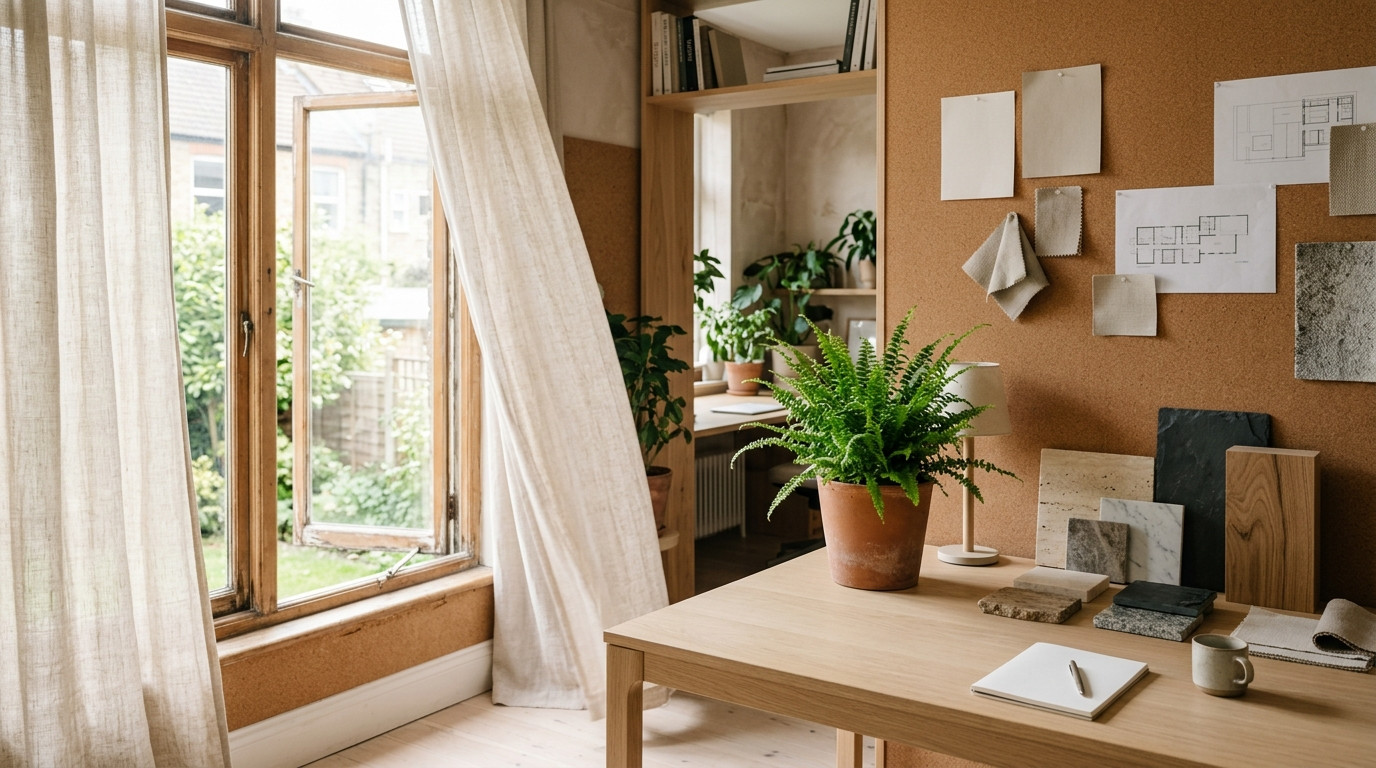
How Biophilic Design Transforms Well-being: Sequenced Execution Playbook
By Ace Bailey Published November 26, 2026 12:00 PM Updated November 28, 2026 3 min read
Use this article as a practical decision guide, then follow the related resources when you are ready to act.
Healing Spaces: Quick Scan & Core Answer
- Core Answer: Biophilic design enhances well-being by integrating natural elements into built environments, reducing stress and improving cognitive function.
- Mechanism: Biophilic design leverages daylight, natural textures, and acoustic calm to align indoor spaces with natural light cycles, visual refuge, and tactile organic materials.
- Hard Boundary: Biophilic design must include real daylight access, real air movement, and low-tox natural finishes; decorative greenery or painting walls green does not count.
Healing Spaces: Prerequisites Before You Start
Before starting the biophilic design protocol, audit how your room currently handles daylight glare, stale indoor air, and hard-surface noise rather than shopping for decorative accents. Note which hours direct sun hits your desk, whether windows can open for five minutes of cross-ventilation, and where synthetic fragrances or harsh overhead LEDs cause fatigue. Addressing those physical baselines first ensures that every natural texture or plant you add actually supports calm and sustained focus instead of masking a poorly ventilated room.
In homes, classrooms, and small studios, visual refuge matters just as much as brightness: placing seating so your back feels supported while your eyes can occasionally rest on greenery or distant daylight lowers nervous-system tension throughout long work blocks. Even modest changes—like swapping cold overhead bulbs for warm task lighting and adding cork or wool rugs to soften echo—produce noticeable relief without structural renovations.
Healing Spaces: The Sequenced Protocol
- Review Origins of Biophilia and Environmental Stress Reduction: Understand the origins of biophilia and how environmental stress reduction can be applied to create healthier spaces.
- Identify Your Environments: Determine where biophilic design can be applied, whether it's homes, schools, or workplaces.
- Design for Daylight: Prioritize daylight access in your design plans. Consider using natural light cycles, live plants, and timber surfaces to reduce eye strain and improve focus.
- Incorporate Natural Textures: Use tactile organic materials like wood, stone, and natural fibers to create visual refuge and reduce stress.
- Control Acoustic Calm: Ensure spaces have low noise levels and acoustic calm to support cognitive function and overall well-being.
Healing Spaces: Checkpoint Comparison Table
| Sequence Step | Verification Check | Stop / Abort Signal |
|---|---|---|
| 1 | Review Origins | None |
| 2 | Identify Environments | None |
| 3 | Design for Daylight | No real daylight |
| 4 | Incorporate Textures | No natural materials |
| 5 | Control Acoustic | No low noise levels |
Healing Spaces: Stop Conditions & Who Should Skip This
- Stop Conditions: Skip the protocol if you are unable to provide real daylight, incorporate natural textures, or control acoustic levels in your environment.
- Who Should Skip: Those who cannot provide real daylight access, have no real air movement, or cannot use low-tox natural finishes.
Healing Spaces: Practical Questions
Daylight, Air Movement, and Acoustic Calm
Before spending money on decorative plants or custom furniture, evaluate three physical baselines in any room: side daylight glare, stale air pockets, and hard-surface echo. Repositioning a work desk perpendicular to a window immediately reduces screen glare while preserving natural light cues that regulate afternoon alertness. Pairing a cross-breeze window routine with tactile wood, cork, or linen surfaces softens room acoustics and lowers visual clutter—delivering measurable calm without structural remodeling. Whenever you test a change, give the room one full workweek before judging results so temporary weather shifts do not skew your baseline.
Healing Spaces: FAQ
Which step causes the most downstream errors if skipped?
The step that causes the most downstream errors if skipped is incorporating natural textures and daylight orientation first, rather than buying decorative items.
How long before measurable feedback appears?
Measurable feedback appears relatively quickly, often within a few weeks after adjusting daylight orientation, air movement, and natural textures.
How do you adapt the sequence under tight budget or time constraints?
Prioritize daylight access and real air movement before spending money on ornamental decor. Use low-cost, natural materials like bamboo, cork, and recycled wood to create a calmer environment.
Healing Spaces: Further Reading
For more resources on biophilic design and well-being, visit Interactive Knowledge Lab and Daily Discovery Center.