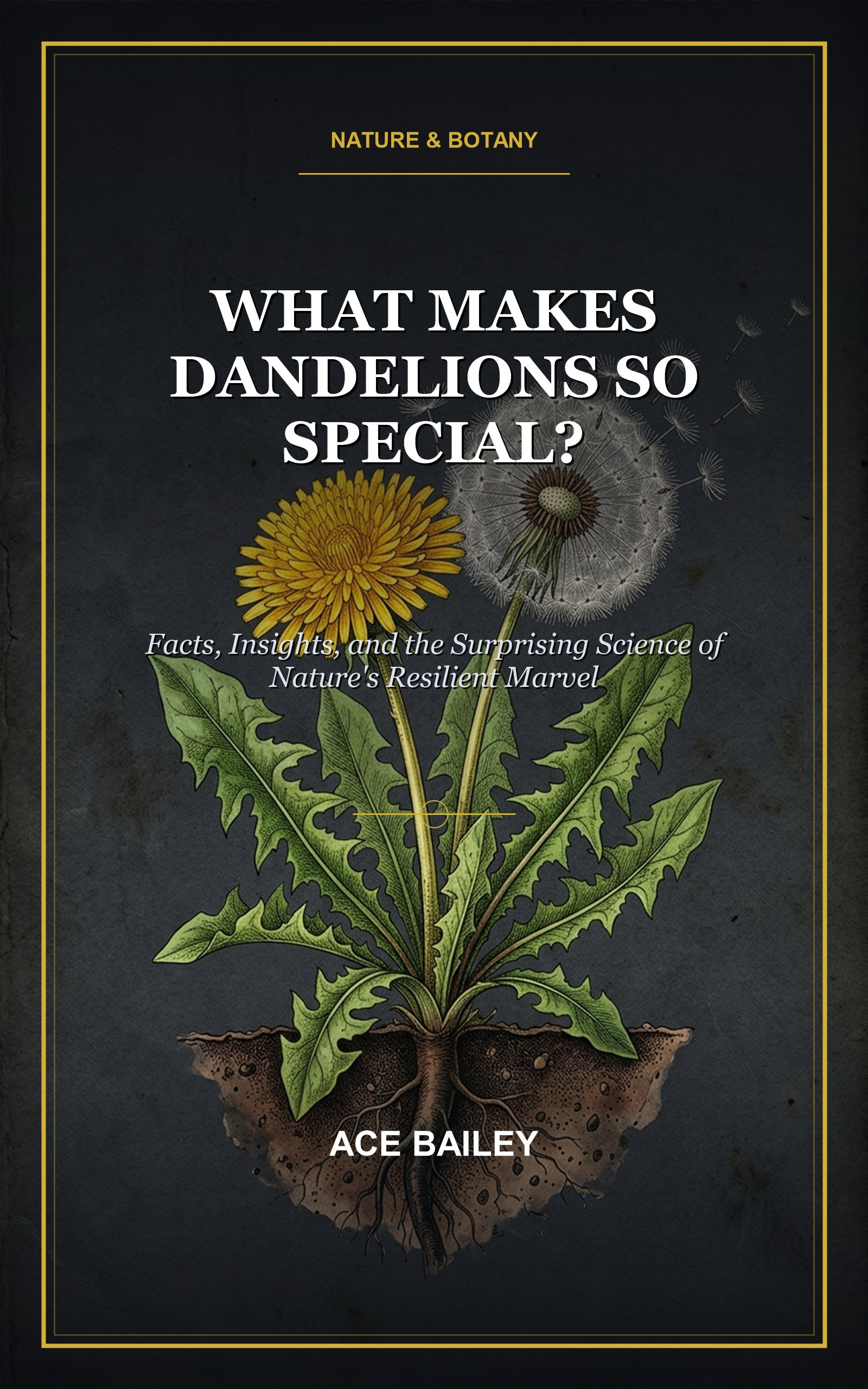
Chapter 1 Free Sample
The Remarkable World of Dandelions: Nature's Resilient Marvels
The Genus Taraxacum: An Overview
Welcome to the captivating world of dandelions, where nature’s resilience meets human curiosity. At the heart of this vibrant plant lies the genus *Taraxacum*, a member of the Asteraceae family, commonly known as the daisy family. This diverse group of flowering plants includes many species, with *Taraxacum officinale*, the common dandelion, and *Taraxacum erythrospermum*, the red-seeded dandelion, being the most notable.
The study of dandelions is so intriguing that it has its own name: taraxacology. This field reflects the fascination with the diverse characteristics and numerous uses of these remarkable plants. Native to Eurasia, *Taraxacum* species have spread globally, particularly establishing themselves in North America, where they are often classified as invasive species thriving in various temperate ecosystems.
One of the most distinctive features of dandelions is their unique flower structure. Each flower head is composed of countless small florets, creating the bright yellow blooms we all recognize. These flowers are not just beautiful; they demonstrate the plant’s adaptability. The dandelion’s bilobed stigma and intricate arrangement of florets contribute to its identity, making it a fascinating subject for scientific study and casual observation.
Dandelions also exhibit remarkable reproductive strategies. After blooming, the flower head transforms into a fluffy, parachute-like seed head, ingeniously designed for windborne seed dispersal. Each seed, adorned with a pappus—a tuft of soft hairs—can be carried by the breeze, ensuring the plant's proliferation across various landscapes.
Perhaps one of the most astonishing aspects of dandelions is their ability to reproduce asexually through apomixis, allowing them to produce seeds without fertilization. This enables rapid colonization of disturbed soils, enhancing their survival and contributing to their reputation as resilient survivors in diverse habitats.
When examining the botany and ecology of dandelions, it becomes clear that these seemingly simple plants carry a rich natural history. Their spread from Eurasia to North America illustrates remarkable biological adaptability alongside an enduring relationship with human agriculture and herbalism. Rather than merely competing with turfgrass, dandelions supply critical early-season nectar for pollinators and support nutrient cycling in compacted soils.
We will explore the many facets of dandelions, from their culinary delights and medicinal properties to their ecological importance and cultural significance. Join us as we uncover what makes dandelions not just ordinary plants, but extraordinary wonders of the natural world.
Distinctive Features: Flowers, Leaves, and Seeds
Dandelions are instantly recognizable by their cheerful yellow flowers that bloom in daylight and close their petals at night. Each flower head is a delightful collection of numerous small florets, contributing to the dandelion's signature appearance. This striking display captivates the eye and plays a vital role in the plant's reproductive process.
The leaves of the dandelion form a basal rosette that hugs the ground. These deeply lobed leaves efficiently capture sunlight, allowing the plant to thrive in various environments. Their arrangement ensures maximum light absorption, crucial for growth and energy production.
Once flowering concludes, the dandelion undergoes a remarkable transformation. The vibrant yellow blooms give way to a whimsical, parachute-like seed head, evoking childhood memories of blowing on dandelion puffs to make wishes. Each seed is equipped with a pappus, enabling it to be carried by the wind over considerable distances. This adaptation aids in seed dispersal and contributes to the plant's reputation as an invader in many ecosystems.
End of Chapter 1 preview. Get the full 7-chapter digital edition (EPUB & PDF) below.